

Recent Promotions
No promotions recorded for this influencer yet.
Latest X Posts

(1) Most countries do not actually have a military. Instead, most countries outsource their security to the US (most common), to Russia (like Belarus), or to China (like North Korea, partially). Iran is unusual in that they're going it largely alone. They're also unusual in that they actually appear to be winning. And if Iran does manage to drive the US out of not just Afghanistan and Iraq, but the entire Middle East, they'll have unfortunately undermined the idea that America can or will provide any security guarantees at all. (2) So, with the withdrawal of the American Empire, every country is going to need a new military. Some countries will "build their own." The ones most likely to go nuclear are Japan and Turkey. Maybe also Germany, South Korea, Australia, Brazil, and Poland. They'll do so both for defense and to guarantee an energy supply now that Hormuz isn't stable. Thus, the Iran war will unfortunately obviate non-proliferation. Most other countries will not build their own militaries. They'll simply do what's necessary to align with the new regional hegemon. That new hegemon will likely be China in East and Southeast Asia, Russia in North Asia and Eastern Europe, and Iran in West Asia. India has a tough situation in South Asia due to Pakistan. MAGA America will probably refocus on Latin America. And Newsom's Democrats will likely align with China, as Carney's Canadians have already done. (3) But what about every group in the world that's not running a country? What about every company and community? They'll need to think about a world where the US military has withdrawn, and isn't there for them. Is there any way to preserve something that looks like the rules-based order without the former guarantor of those rules? (a) In the physical world, these companies and communities will have to find a country that has either built their own security, as described above, or is aligned with one that has. And abide by whatever new rules they set. From the standpoint purely of tech, dozens of countries are now surprisingly permissive, opening up new special economic zones and digital nomad visas. (b) In the digital world, a partial answer is the code-based order, protected by encryption rather than weapons. Like the handoff from the British to the Americans, can we hand some of what America did off to the Internet? Crypto is furthest along here. The anti-government strain within American libertarianism, the Ron Paul strain that says you can't trust the government, well...crypto simply applies that to all of the US government, including the parts run by Republicans, including the dollar that backs the US military. Crypto does not trust the plan. After all, the US has >$175T in compounding debt, and it's financially going to zero, economically doomed just like the USSR, albeit from Keynesianism rather than Communism. Elon is our best guy and couldn't fix it with DOGE. As he said, he did his best. (4) The closest modern analog to the end of the US empire may be the end of the USSR's empire. Just like the Soviet Union became Russia, the USA is becoming America. Troops are being pulled back from around the world, it's becoming a "republic, not an empire", and everyone has to figure it out for themselves. Now, many wars did erupt in the aftermath of Soviet withdrawal, like Chechnya and the Tajikistani civil war. But it's not like every single place fell into war. Estonia didn't, Poland didn't. The Czechs and Slovaks had the Velvet Divorce. Countries long under the Soviets worked out local security arrangements between themselves. That's what's happening now as the American Empire withdraws from the world. Everyone is figuring it out for themselves. IN SUMMARY (a) You're correct that a country needs a military, but the world is losing the US military, so they'll build their own or align with a country that has one. (b) You're correct that the US military historically protected the rules-based order, but in many ways it's abandoning that order, while much of Eurasia is actually going further in the direction of free trade, and the Internet is exporting global rule-of-law via rule-of-code. (c) You're correct that US military withdrawal will likely result in chaos in parts of the world, like the USSR's military withdrawal did, but I don't think it results in chaos in all of the world, anymore than the USSR's withdrawal did. (d) Don't take it from me, though. The 2025 US National Security Strategy said that elites "overestimated America's ability" and that "permanent American domination of the entire world" is not in the best interests of the US. In other words, they've already announced that the world is multipolar, that the unipolar moment is over, that US will no longer pay any price and bear any burdern. So everyone will need to figure out security after the American empire leaves, just as they had to figure out local security arrangements after the British, French, and Soviet empires left. https://www.whitehouse.gov/wp-content/uploads/2025/12/2025-National-Security-Strategy.pdf

Far left: we need to tear down the system Center left: we need a system Center right: we need positive-sum games Far right: we need to win zero-sum games
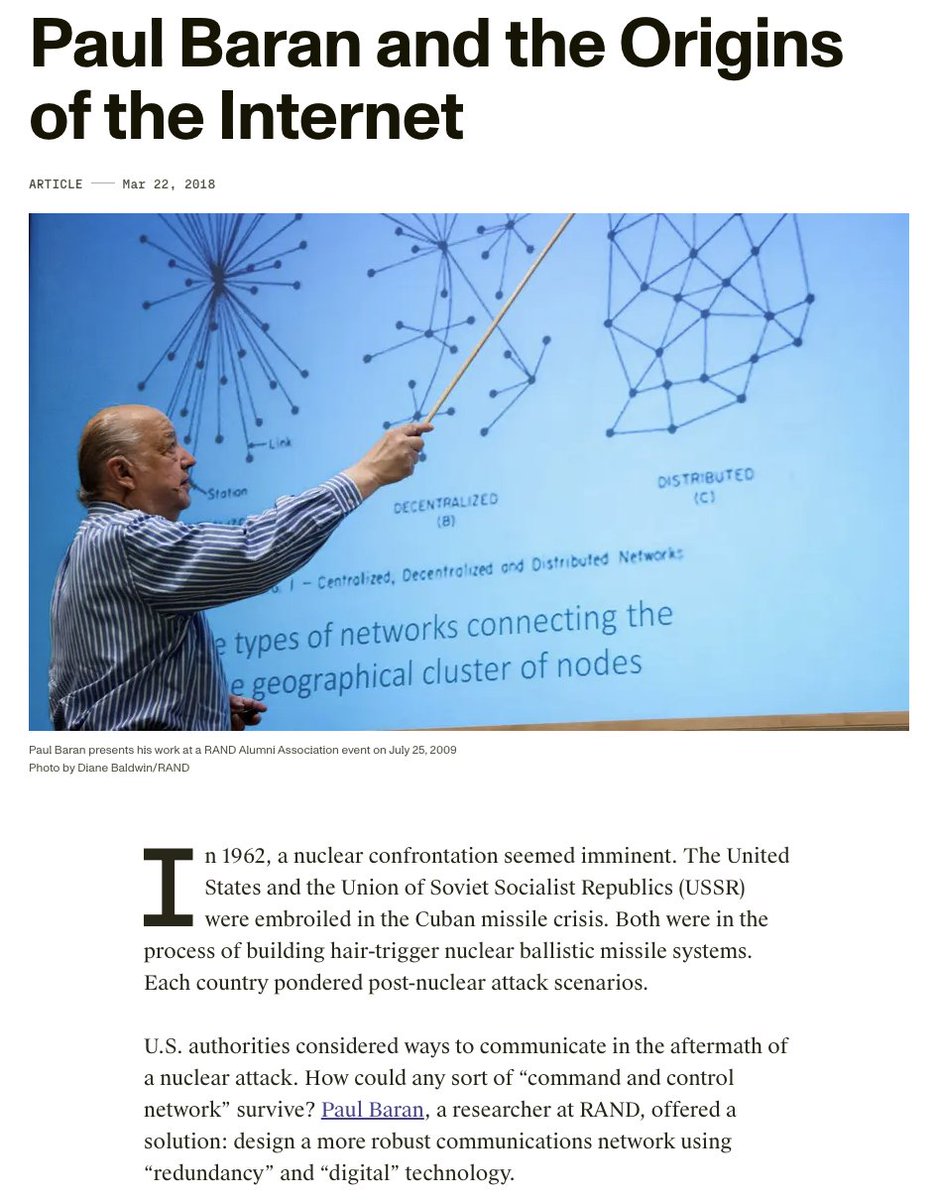
Here's the citation on how Paul Baran of RAND proposed a packet-switched network that could survive a nuclear attack. His design was later adopted primarily for efficiency rather than resiliency purposes. But that initial property of resiliency persisted. In a deep sense, the network was designed to outlive the state. https://www.rand.org/pubs/articles/2018/paul-baran-and-the-origins-of-the-internet.html
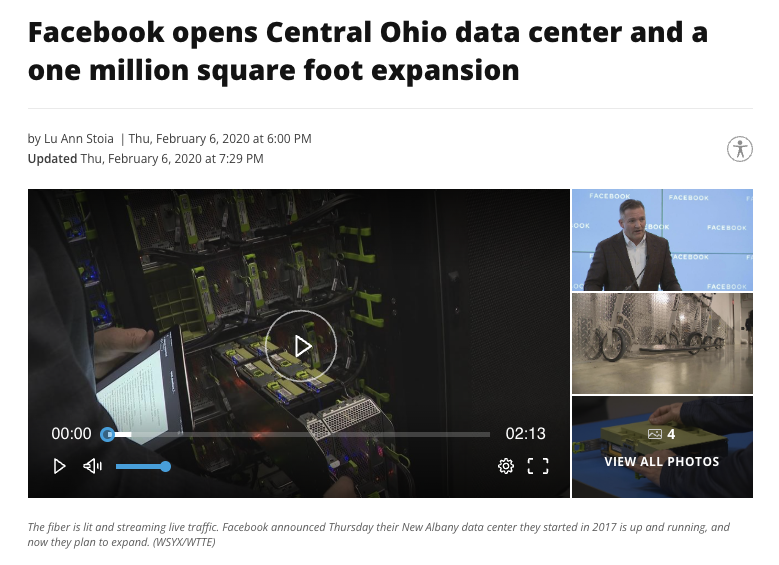
By the way, where is that Meta data center? Note that location doesn't really matter. You could start with any suitable green lawn with reasonable power costs, and then print out the datacenter from a blueprint. What mattered was the cloud community that had the will and capital to print out that datacenter. Today that cloud community is Meta, a tech giant. However, coordination costs are rapidly falling. So tomorrow it could be an internet community, perhaps organized around a coin, that isn't a traditional company at all. But if you're curious...the location was Ohio. Which means you can print out the Internet in Middle America too, if you want to. https://abc6onyourside.com/news/local/facebook-opens-central-ohio-data-center-and-a-one-million-square-foot-expansion
Frequently Asked Questions
Balaji is a Network States crypto influencer active on Twitter. His work focuses on The Network State, decentralized governance, and digital sovereignty. He provides profound insights on Crypto Dapp, exploring the intersection of technology and the future of global society via blockchain innovation.
Balaji primarily covers topics related to Network States, decentralized governance, and digital sovereignty. His content explores the intersection of technology and the future of global society through blockchain innovation. More specific topic details may be available on his profile.
You can follow Balaji on Twitter for his insights into the Web3 space. His platform presence focuses on sharing profound thoughts and discussions there.
Balaji creates various content types, including Threads, Visionary Essays, Thought Leadership, and News. He also engages in AMAs, providing profound insights on crypto-states and digital sovereignty.
Balaji is worth following for his profound insights into Network States, decentralized governance, and digital sovereignty. As a leading voice in the Web3 space, his content on Crypto Dapp provides unique perspectives on blockchain innovation and the future of global society.
Specific details regarding collaboration costs and requirements for Balaji are not provided in the current data. You can explore potential collaboration opportunities by contacting him through his profile on Crypto Dapp, where he offers content types like Threads and Thought Leadership.
Balaji stands out due to his unique focus on Network States, decentralized governance, and digital sovereignty. His profound insights explore the intersection of technology and the future of global society, distinguishing him as a leading voice in the Web3 space.
Other Influencers

vitalik.eth
vitalik.eth offers profound insights primarily focused on blockchain technology and the evolution of Ethereum. His contributions are prominently featured on Twitter, where he regularly shares his perspectives, and he actively participates in shaping discussions across the broader Web3 ecosystem. He is known for his deep dives into the complex landscape of decentralized systems. Content themes frequently explored by vitalik.eth include the philosophical underpinnings of digital currencies, the ongoing development of the Ethereum protocol, and the future trajectory of web decentralization. He often discusses topics such as scaling solutions, protocol design, and the broader implications of decentralized technologies for society and global coordination. This content is presented in English. Readers and viewers who benefit most from following vitalik.eth are those interested in the foundational technical aspects of blockchain, the philosophical dimensions of decentralization, and the long-term vision and challenges facing the Web3 space. His discussions provide valuable context for understanding the core ideas driving the ecosystem.

Watcher.Guru
Watcher.Guru provides high-frequency, real-time coverage of global cryptocurrency and finance markets. As a prominent voice in the news and media niche, Watcher.Guru is primarily active on Twitter, where they deliver constant updates to their followers. Their approach centers on immediate dissemination of information across the digital asset landscape. Content themes frequently explored by Watcher.Guru include breaking news in blockchain regulation, significant market movements, and the ongoing developments in institutional adoption of digital currencies. They consistently offer real-time updates and market analysis, providing snapshots of key events as they unfold. This focus helps followers stay informed on critical shifts within the industry. Watcher.Guru's content caters primarily to an English-speaking audience, with a significant following in countries like the United States, United Kingdom, Canada, and Australia. Viewers and readers who benefit most from following Watcher.Guru are those who require rapid, unbiased information on current events and market changes in the crypto and traditional finance sectors. They are an ideal follow for anyone needing immediate insights into the fast-paced world of digital assets.

Altcoin Daily
Altcoin Daily provides engaging market analysis and breaking news for the crypto space. The channel focuses on essential updates across Bitcoin, Ethereum, and Solana, delivering content primarily through YouTube, Twitter, and Instagram. With a consistent presence on these platforms, Altcoin Daily keeps its audience informed about the rapidly evolving digital asset landscape. Content themes frequently include discussions around macroeconomic impacts on cryptocurrency markets, such as Federal Reserve actions and global economic shifts. They often explore significant institutional crypto adoption announcements and their implications for major assets. Viewers can expect to see analysis on Bitcoin and Ethereum price movements, alongside urgent market news and insights into potential regulatory developments that could affect holders. The audience for Altcoin Daily primarily spans English-speaking regions including the United States, United Kingdom, Canada, and Australia. Viewers who benefit most from following Altcoin Daily are those seeking comprehensive market overviews, explanations of key news events, and perspectives on how broader economic and institutional trends influence the crypto market. It is well-suited for individuals looking to stay informed on major industry narratives.
CoinDesk
CoinDesk operates as a prominent global media company, specializing in delivering comprehensive news, insights, and data across the cryptocurrency and blockchain technology sectors. Their primary niche centers around providing timely crypto news and in-depth analysis. While actively engaging with audiences on platforms like Twitter, CoinDesk also offers extensive coverage through their website, podcasts, and specialized market reports. CoinDesk's content consistently explores themes such as evolving market trends, significant regulatory developments, and future innovations within the blockchain sector. They frequently provide detailed market analysis and data insights, often drawing from their coverage of major industry events. Recurring topics include the impact of macro events on crypto, specific protocol updates, and emerging use cases for distributed ledger technology. With a global footprint that includes audiences in the US, Spain, and Hong Kong, CoinDesk caters to an international readership, publishing content in both English and Spanish. Individuals seeking detailed, current information on the broader crypto and blockchain ecosystem, including market movements, technological advancements, and regulatory landscapes, will find immense value in following CoinDesk's consistent updates. This content is particularly useful for industry professionals, investors, and enthusiasts who require reliable context.
Sign in to watch & analyze
Videos, engagement metrics and FAQs are free for registered users.