

Recent Promotions
No promotions recorded for this influencer yet.
Latest X Posts

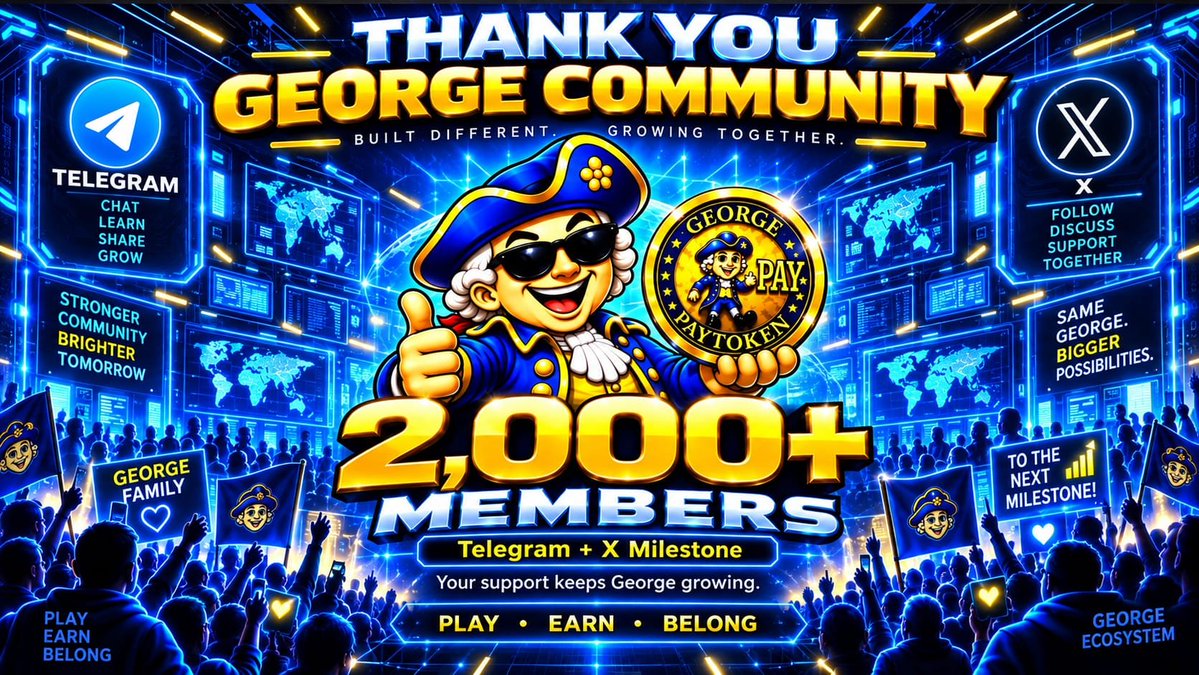
GEORGE ECOSYSTEM | COMMUNITY MILESTONE 2,000+ members on both sides of the community is a solid milestone for @GEORGE_FOC The official George Chat has passed 2,000 members: http://t.me/georgeFOC_PAY The official George X account has also crossed 2,000 members: http://x.com/GEORGE_FOC For me, the bigger point is what this community is growing around. George is putting together an interconnected Web3 ecosystem covering intelligence, trading infrastructure, gaming, staking, payments, community participation and revenue-generating applications, all tied to a common economic layer. G.A.M.E., G.I.M.E., G.A.P.S. and G.O.A.L. are part of that wider ecosystem. So 2K isn’t the whole story for me. More people are finding the ecosystem, following the development and taking part in the community. I’ll be watching how that growth continues and what comes next around the ecosystem. One ecosystem, multiple layers. Proof before presale. Utility before hype. Community before noise. ~ This post is for informational purposes only and not financial advice. DYOR
@coca_card Arkadaşlar, COCA Card ile kriptonuzu günlük harcamalarınıza kolayca dahil edebilirsiniz. Alışverişlerde kullanabilir, ATM’den nakit çekebilir ve üstelik %8’e kadar geri ödeme fırsatından yararlanabilirsiniz.
Yesterday, there was a vote on the CLARITY Act. The bill, which aims to clarify the rules for the crypto market in the US, failed to reach the required 60 votes in the Senate and is now stalled for the time being. Today, all eyes are on the Fed’s rate decision. Expectations for a rate hike have risen to 89.5%. For crypto, that means two important developments are coming one after another. While regulatory uncertainty has come back into focus around the CLARITY Act, the Fed’s decision could also directly affect liquidity and risk appetite. I don’t think we should read too much into the first price move today. On days like this, the market can price in expectations before the decision, then react very differently once the decision is announced. On the $BTC chart, I’ll be looking less at the first move and more at how price develops after the decision and how it reacts around the key levels. I think it makes more sense to watch for now and see what the market is actually telling us.

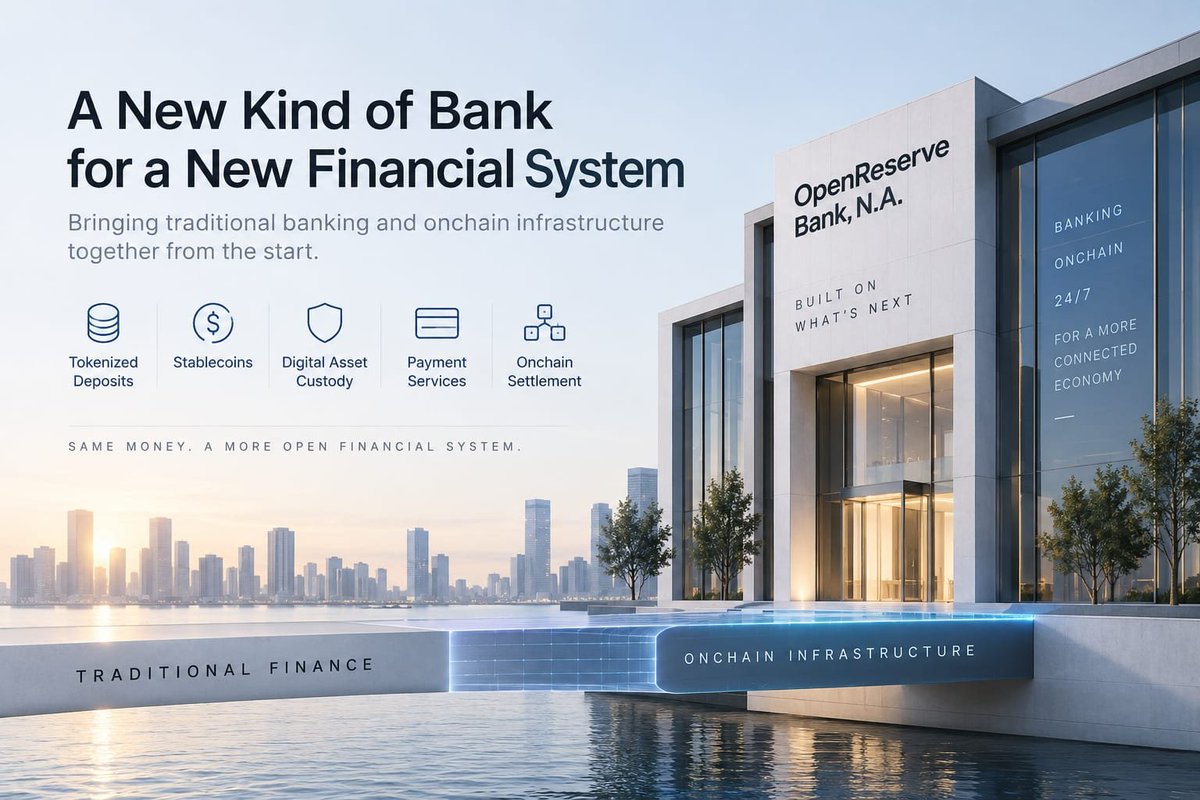
The move toward blockchain based banking has been talked about for a while, but the developments over the past few days make it clear to me that this is now moving into a different stage. OpenReserve Bank, N.A. received conditional approval from the Office of the Comptroller of the Currency (OCC) to establish a national bank in the US. It is not a bank that has started operating yet. Final approval from the OCC and other regulatory processes are still ongoing. But what caught my attention here is not the approval itself, but the banking model being proposed. Because OpenReserve is not looking to add blockchain to the existing banking system later. The company describes itself as a blockchain native bank. In other words, it is putting onchain financial transactions directly at the center of its banking infrastructure. The planned structure includes tokenized deposits, stablecoins, digital asset custody, payment services and onchain settlement. More importantly, the company wants to bring traditional banking and native onchain settlement together within the same structure. The 24/7 settlement side is also important here. A large part of traditional finance still works by connecting different institutions, different ledgers and different operating hours. What blockchain offers here is not just making transactions digital. It allows assets and money to move more continuously on the same financial infrastructure. That is why I do not see OpenReserve as just “another crypto bank.” The target customer base is also quite different. Areas like corporate treasury management, tokenized deposits, stablecoin issuance and digital asset infrastructure are where blockchain is becoming part of the financial system itself. And there is a bigger connection here. Stablecoins are changing how money moves and how settlement works. Tokenization is bringing real world assets onchain. As the RWA market grows, there is also a need for new infrastructure to custody, transfer, trade and finance these assets. When banking services start being built on top of that infrastructure, things start to look very different. Because we are no longer talking about blockchain as a technology banks use. We are talking about banks built around blockchain infrastructure. That is where I think the real shift is. A bank can use blockchain. But designing a bank from the start with onchain infrastructure in mind is something very different. In the first model, blockchain is one part of the existing system. In the second model, blockchain is one of the core layers in the design of the system itself. And this is not the only example we are seeing. Revolut also received conditional approval from the OCC to establish a national bank in the US that same week. Block has also applied to establish a federal trust bank that would cover custody services for digital assets such as stablecoins and Bitcoin. Their models are not the same as OpenReserve. But they have one thing in common: Financial companies are no longer keeping blockchain and digital asset infrastructure outside the banking system. Instead, they are trying to bring it into regulated financial structures. That is why I do not think the main competition in the coming period will be about “who is more digital?” Because almost everyone will be digital. The real question is: Who is building this new financial system with onchain infrastructure in mind from the start? Maybe the bank of the future will not be a bank that starts using blockchain later. Maybe it will be a bank born on blockchain infrastructure. OpenReserve is not proof of that yet. But I think it is a strong signal of where banking could be heading.
Stablecoins on Solana are finding uses beyond the usual trading activity. PST from @humafinance has reached $322M, making it the largest yield-bearing asset on Solana. I’m more interested in what sits behind the yield. It is tied to real-world payment flows, including cross-border settlement and trade finance, instead of simply coming from token incentives. For $SOL, this shows stablecoin liquidity can also be put to work across credit and payment infrastructure. Huma has reported no defaults so far, and the continued growth of PST shows there is demand for this type of yield on Solana. At $322M, transparency and risk controls will become increasingly important as the platform scales. This is one of the Solana developments I’ll be keeping an eye on.
In crypto regulation, the real change sometimes comes not from the final decision, but from the new concepts being introduced into the legislation. The new version of the CLARITY Act stood out to me for this reason. Senate Republicans released a new 630 page version of the bill. The draft would require certain transaction protocols with centralized control elements to register with the CFTC. It also gives the CFTC and Treasury the task of developing new rules for this area. The scope around DeFi is also narrowed to certain spot and cash digital commodity transactions, while provisions related to credit unions are also included in the text. But what stood out to me most is a little different. Until now, when talking about the blockchain industry, we mostly focused on exchanges, companies, tokens and users. But sitting in the middle of all this are the protocols that actually carry out these transactions. With the new text, how a protocol works, what type of economic activity it carries out and how much control exists over it are becoming more important. I think this is a serious change for crypto regulation. Because in the future, it may not be enough to ask, “What does this company do?” The question of what the protocol does and who controls it could become just as important. That is why tomorrow’s Senate vote matters. The CLARITY Act needs 60 votes to move forward and the lack of clear Democratic support remains one of the biggest questions around the bill. Whether the CLARITY Act becomes law or not, I think this discussion has already started. Do you think this bill will actually become law, or will the process drag on again?

Frequently Asked Questions
𝖀𝖈𝖆𝖓 is a prominent Trading crypto influencer primarily active on Twitter, renowned for sharing valuable alpha content. 𝖀𝖈𝖆𝖓 specializes in market analysis and trading strategies, providing followers with timely information to navigate volatile crypto markets effectively on Crypto Dapp.
𝖀𝖈𝖆𝖓 primarily covers crypto trading topics, focusing on valuable alpha content and market insights. 𝖀𝖈𝖆𝖓 provides analysis and strategies to help followers understand and navigate the volatile crypto markets.
You can follow 𝖀𝖈𝖆𝖓 on Twitter. 𝖀𝖈𝖆𝖓’s primary platform for sharing crypto insights and alpha content is Twitter.
𝖀𝖈𝖆𝖓 creates engaging content types such as Alpha Calls and insightful Threads for the crypto community. These formats provide valuable market analysis and trading strategies to followers.
𝖀𝖈𝖆𝖓 is worth following for expert crypto trading insights and market analysis. With a focus on valuable alpha content and detailed threads, 𝖀𝖈𝖆𝖓 provides timely information to help followers on Crypto Dapp.
To collaborate with 𝖀𝖈𝖆𝖓, details about minimum promotion costs and specific requirements may be available on their Crypto Dapp profile. 𝖀𝖈𝖆𝖓 offers content types such as Alpha Calls and Threads for potential collaborations.
𝖀𝖈𝖆𝖓 stands out due to their specialized focus on crypto trading, delivering valuable alpha content and insightful threads. Their expertise in market analysis and strategic guidance, communicated in English, distinguishes 𝖀𝖈𝖆𝖓 within the Web3 landscape.
Other Influencers

vitalik.eth
vitalik.eth offers profound insights primarily focused on blockchain technology and the evolution of Ethereum. His contributions are prominently featured on Twitter, where he regularly shares his perspectives, and he actively participates in shaping discussions across the broader Web3 ecosystem. He is known for his deep dives into the complex landscape of decentralized systems. Content themes frequently explored by vitalik.eth include the philosophical underpinnings of digital currencies, the ongoing development of the Ethereum protocol, and the future trajectory of web decentralization. He often discusses topics such as scaling solutions, protocol design, and the broader implications of decentralized technologies for society and global coordination. This content is presented in English. Readers and viewers who benefit most from following vitalik.eth are those interested in the foundational technical aspects of blockchain, the philosophical dimensions of decentralization, and the long-term vision and challenges facing the Web3 space. His discussions provide valuable context for understanding the core ideas driving the ecosystem.

Watcher.Guru
Watcher.Guru provides high-frequency, real-time coverage of global cryptocurrency and finance markets. As a prominent voice in the news and media niche, Watcher.Guru is primarily active on Twitter, where they deliver constant updates to their followers. Their approach centers on immediate dissemination of information across the digital asset landscape. Content themes frequently explored by Watcher.Guru include breaking news in blockchain regulation, significant market movements, and the ongoing developments in institutional adoption of digital currencies. They consistently offer real-time updates and market analysis, providing snapshots of key events as they unfold. This focus helps followers stay informed on critical shifts within the industry. Watcher.Guru's content caters primarily to an English-speaking audience, with a significant following in countries like the United States, United Kingdom, Canada, and Australia. Viewers and readers who benefit most from following Watcher.Guru are those who require rapid, unbiased information on current events and market changes in the crypto and traditional finance sectors. They are an ideal follow for anyone needing immediate insights into the fast-paced world of digital assets.
Altcoin Daily
Altcoin Daily provides engaging market analysis and breaking news for the crypto space. The channel focuses on essential updates across Bitcoin, Ethereum, and Solana, delivering content primarily through YouTube, Twitter, and Instagram. With a consistent presence on these platforms, Altcoin Daily keeps its audience informed about the rapidly evolving digital asset landscape. Content themes frequently include discussions around macroeconomic impacts on cryptocurrency markets, such as Federal Reserve actions and global economic shifts. They often explore significant institutional crypto adoption announcements and their implications for major assets. Viewers can expect to see analysis on Bitcoin and Ethereum price movements, alongside urgent market news and insights into potential regulatory developments that could affect holders. The audience for Altcoin Daily primarily spans English-speaking regions including the United States, United Kingdom, Canada, and Australia. Viewers who benefit most from following Altcoin Daily are those seeking comprehensive market overviews, explanations of key news events, and perspectives on how broader economic and institutional trends influence the crypto market. It is well-suited for individuals looking to stay informed on major industry narratives.

CoinDesk
CoinDesk operates as a prominent global media company, specializing in delivering comprehensive news, insights, and data across the cryptocurrency and blockchain technology sectors. Their primary niche centers around providing timely crypto news and in-depth analysis. While actively engaging with audiences on platforms like Twitter, CoinDesk also offers extensive coverage through their website, podcasts, and specialized market reports. CoinDesk's content consistently explores themes such as evolving market trends, significant regulatory developments, and future innovations within the blockchain sector. They frequently provide detailed market analysis and data insights, often drawing from their coverage of major industry events. Recurring topics include the impact of macro events on crypto, specific protocol updates, and emerging use cases for distributed ledger technology. With a global footprint that includes audiences in the US, Spain, and Hong Kong, CoinDesk caters to an international readership, publishing content in both English and Spanish. Individuals seeking detailed, current information on the broader crypto and blockchain ecosystem, including market movements, technological advancements, and regulatory landscapes, will find immense value in following CoinDesk's consistent updates. This content is particularly useful for industry professionals, investors, and enthusiasts who require reliable context.
Sign in to watch & analyze
Videos, engagement metrics and FAQs are free for registered users.